Let’s start with a confession. I’ve yelled at Siri. I’ve sighed in frustration at a customer service chatbot. And I’ve felt a strange, hollow disappointment when a Netflix recommendation just… missed the mark. Why? Because these interactions feel like talking to a wall—a very well-informed wall, but a wall nonetheless.
What’s missing is emotional intelligence. That human ability to read a room, sense frustration in a voice, or recognize unspoken needs. For decades, AI has been brilliant at crunching numbers but terrible at understanding feelings.
But that’s changing. Fast.
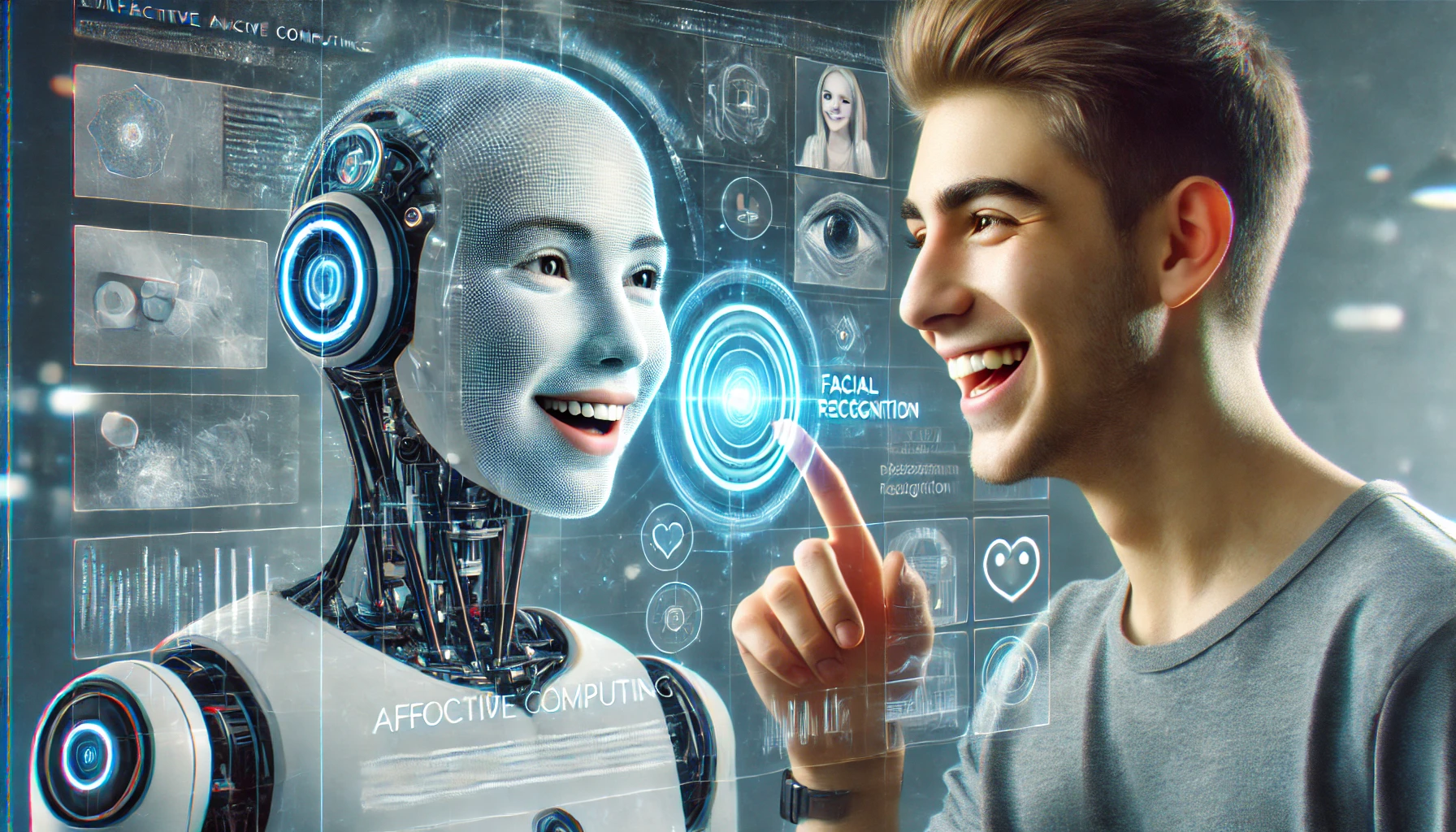
We’re entering the era of affective computing—technology that doesn’t just process what we say, but tries to understand how we feel when we say it. It’s not about creating robots with feelings (we’re not there yet). It’s about creating technology that can recognize, interpret, and respond to human feelings. And this shift is about to change everything from your workplace to your doctor’s office to the app on your phone.
Buckle up. We’re giving machines a crash course in empathy.
What is Affective Computing, Really? (Beyond the Buzzword)
Let’s strip away the jargon. Imagine you’re having a bad day. You’re stressed, your shoulders are tight, and you’re speaking in short, clipped sentences. A human friend would pick up on this—they’d see your frown, hear the tension in your voice, and maybe ask, “Hey, everything okay?”
Affective computing aims to give machines that same perception. It’s the multidisciplinary field teaching AI to recognize, understand, and simulate human emotions. The goal isn’t to build a machine that feels sadness, but one that can detect sadness in you and adjust its response accordingly.
Why Now? The Perfect Storm
This isn’t science fiction suddenly becoming real. It’s the result of a convergence:
- Advanced Sensors: Our devices are now packed with high-res cameras, sensitive microphones, and even radar (like Google’s Soli) that can detect subtle movements.
- Explosion of Data: We have vast datasets of human expressions, vocal patterns, and physiological signals to train AI models.
- Processing Power: Edge computing allows this complex analysis to happen in real-time, on your device, not in a distant data center.
The pieces are finally in place to move beyond binary commands (on/off, yes/no) and into the nuanced world of human affect.
The Building Blocks: How Can a Machine “See” Emotion?
So, how does a chunk of silicon and code begin to grasp something as fluid as human emotion? It looks for clues. Lots of them.
1. The Face: A Window to Your Feelings (Facial Action Coding)
This is the most researched area. Systems use computer vision to map your face in real-time, tracking microscopic muscle movements called Action Units. A genuine Duchenne smile (the crinkly-eyed, happy one) involves specific muscles around the eyes and mouth. A furrowed brow combines several forehead and eyebrow actions.
It’s not just looking for “happy” or “sad.” Sophisticated systems analyze combinations of over 40 facial movements to infer complex states like confusion, concentration, or skeptical interest. Companies like Affectiva have pioneered this, training their AI on millions of facial expressions from around the world to account for cultural differences in emotional display.
2. The Voice: It’s Not What You Say, It’s How You Say It (Vocal Analytics)
Think about how your voice changes when you’re excited (higher pitch, faster pace) versus tired (slower, flatter tone). Vocal emotion recognition AI analyzes hundreds of acoustic features:
- Tone/Pitch: The melody of your speech.
- Pace/Rate: How quickly you’re speaking.
- Energy/Volume: The intensity behind your words.
- Timbre: The unique texture of your voice.
- Pauses & Fillers: The “ums,” “uhs,” and silences that signal hesitation or thought.
This is why newer voice assistants are getting better at detecting frustration. They hear the tightening in your vocal cords and can respond with, “I sense you’re frustrated. Let me connect you to a human agent.”
3. The Body: What Your Posture is Screaming (Biometrics & Movement)
Emotion lives in the whole body. Affective computing can also analyze:
- Gestures: Aggressive pointing vs. open-handed inviting.
- Posture: Slumped shoulders (dejected/defeated) vs. leaning forward (engaged).
- Physiological Signals: This is the holy grail. Wearables can provide direct data on heart rate variability (HRV), galvanic skin response (GSR—basically sweat), and even body temperature. A spike in GSR and a jump in heart rate? That’s a strong indicator of stress or excitement, regardless of what your face is showing.
4. The Words: The Final Piece of the Puzzle (Textual Sentiment Analysis)
While analyzing text alone is older technology, combining it with the other modalities creates a powerful picture. The AI cross-references what you typed (“This is fine”) with how you might have said it (sarcastic tone detected) and what your face showed (eye-rolling gesture) to get the true meaning.
Real-World Applications: Where You’ll Meet Emotional AI
This isn’t just lab research. Affective computing is quietly integrating into tools and services you use right now.
Revolutionizing Mental Health & Wellbeing
This is perhaps the most promising and sensitive application.
- Therapeutic Chatbots like Woebot: These don’t just offer canned responses. They analyze your word choice and self-reported mood to detect patterns in your thinking, like catastrophizing or all-or-nothing language, and guide you through evidence-based cognitive behavioral therapy (CBT) techniques.
- Remote Patient Monitoring: For patients with depression or anxiety, apps can use the front-facing camera (with consent) to analyze facial expressivity and vocal prosody during weekly check-ins. A sustained flattening of affect (reduced emotional range in face and voice) can be an early, objective warning sign to a clinician that a patient’s depression is worsening, prompting a check-in.
- Autism & Social Skills Support: Tools like Microsoft’s Seeing AI and others can help individuals on the autism spectrum interpret the emotional expressions of people around them in real-time, providing social cues that might otherwise be missed.
Transforming Education & The Workplace
- The Adaptive Learning Platform: Imagine an online course that can tell when you’re confused. If your webcam (opt-in, always) detects prolonged brow-furrowing and your mouse shows hesitant movements, the system could automatically offer a supplemental video or rephrase the concept. It personalizes the pace based on cognitive-emotional state, not just test scores.
- The Empathetic Meeting Facilitator: Platforms like Zoom are exploring features that provide speakers with real-time feedback. Is your audience leaning back with crossed arms (disengaged)? Are key decision-makers nodding (agreement)? This could help presenters adjust on the fly. For managers, it could flag during one-on-ones that a team member’s vocal tone suggests they’re holding back, prompting a more probing question.
Redefining Customer Experience
- Beyond the Survey: Call centers are using vocal analytics to score customer sentiment in real-time. If a system detects rising anger in a caller’s voice, it can instantly escalate the call to a senior agent or offer a specific concession, potentially saving the relationship.
- The In-Store Experience: Some retail and automotive companies use anonymized camera data to gauge overall customer engagement and confusion with displays or products, allowing them to optimize store layouts in ways surveys never could.
The Future of Gaming & Entertainment
- Truly Reactive Narratives: Future video games won’t just change based on your choices in a menu. They could adapt based on your physiological state. A horror game that senses (via your webcam or wearable) that you’re not scared enough could make the environment darker, the music more unsettling. A narrative could offer a character more emotional support if it senses you, the player, are feeling sad.
The Ethical Minefield: Why This Makes Us So Uncomfortable
Here’s where we need to take a very deep breath. The power to detect emotion is also the power to manipulate it. The ethical questions here are enormous.
1. Consent & The Illusion of Privacy
When does emotional data collection cross the line? If a job interview is conducted via a platform with affective analytics, did you consent to having your anxiety levels measured and scored? What if a public kiosk or a car’s driver-monitoring system is analyzing your mood without a clear, explicit notification? The most insidious surveillance isn’t of where you go, but of how you feel.
2. Emotional Manipulation & The “Nudge”
If a system knows you’re sad, it could serve you an ad for comfort food. If it knows you’re impulsive and excited, it could highlight limited-time offers. This moves marketing from persuasion to exploitation of emotional state. In the wrong hands, it’s a toolkit for psychological manipulation at scale.
3. Bias & The Cultural Gap
Emotional expression is deeply cultural. A smile might mean joy in one culture and embarrassment in another. Direct eye contact signals confidence in the West but can be disrespectful elsewhere. If the training data for these AIs is predominantly from one demographic (often Western, white), the systems will fail—or worse, mislabel—the emotions of everyone else, perpetuating harmful biases.
4. The Authenticity Crisis
Knowing we’re being “read” by machines may lead to performative emotion—putting on a happy face for the camera even when we’re struggling. This could create immense pressure, especially in workplace or educational settings, to manage not just our work but our visible emotional labor for an algorithmic audience.
Navigating The Future: Principles for an Emotionally Intelligent Tech World
Given these risks, how do we harness the profound benefits without falling into the dystopia? We need guardrails.
The Four Non-Negotiables
- Opt-In, Always & Everywhere: Emotional data collection must be an explicit, granular choice. “Would you like to enable emotional recognition to personalize your learning?” Not buried in a 50-page TOS.
- Transparency & Explainability: If a system makes a decision based on your emotional state, you have the right to know. “Your lesson was adjusted because the system detected signs of confusion.” No black boxes.
- Data Sovereignty & Ephemerality: This data is the most personal of all. It should be processed locally on your device whenever possible, and not stored in a permanent profile. It should be used for a momentary adaptation, then discarded.
- Human-in-the-Loop: These systems should be augmentations, not replacements, for human empathy. They should flag a patient’s potential decline to a human doctor, not diagnose it. They should suggest a customer is upset to a human agent, not try to solve it alone.
Conclusion: Augmenting Empathy, Not Replacing It
The rise of affective computing forces us to ask a fundamental question: what is the role of technology in the most human parts of our lives?
The answer isn’t to build machines that love us or care about us. They can’t. The answer is to build machines that are attuned to us. Machines that recognize when we need a simpler explanation, when we’re too stressed to navigate a complex menu, or when our voice hints at a pain we haven’t voiced.
This technology holds incredible promise to make our tools more humane, our healthcare more proactive, and our education more responsive. But its power is directly proportional to the ethical framework we build around it.
The goal of affective computing shouldn’t be to create the perfect, emotionally-savvy AI. The goal should be to use this technology to help us be more emotionally present with each other. To offload the cognitive load of interpretation so the human doctor, teacher, or friend can focus on the deep, irreplaceable work of human connection.
Your AI is getting emotional. The real question is, are we emotionally intelligent enough to guide it?
FAQs: Your Questions on Emotional AI, Answered
Q1: Can this technology really tell if I’m lying?
A: This is a common misconception. Affective computing detects emotional and physiological arousal, not truthfulness. Nervousness (sweating, increased heart rate, speech changes) can be caused by lying, but also by anxiety, excitement, or simply being stressed about being suspected. It’s an unreliable and unethical lie detector. Law enforcement use is one of the most concerning applications and demands strict regulation.
Q2: I’m not very expressive. Will these systems misread me?
A: Absolutely, and this is a major challenge. People have different emotional baselines and expressivity. Some cultures and individuals are more stoic. Good affective systems are trained on diverse datasets and should account for this by establishing a personal baseline for you over time (with your consent). They should also rely on multiple signals (voice, words, physiology) rather than just your face.
Q3: Could my emotional data affect my credit score or job prospects?
A: This is the nightmare scenario and a critical legal frontier. In most regions, using affective data for hiring, lending, or insurance is (or should be) illegal. We need strong laws classifying emotional biometrics as a special, protected category of data, like medical records, to prevent this kind of discrimination. Always be wary of any service that links emotional analysis to financial or employment decisions.
Q4: Is this going to make human interaction obsolete?
A: Quite the opposite. At its best, it should enhance human interaction. Think of a therapist using an app that flags a subtle increase in a client’s vocal tension when discussing a specific topic—that’s a valuable clue for the human therapist to explore deeper. The machine provides data; the human provides understanding, compassion, and care. The tool augments the relationship; it doesn’t replace it.
Q5: How can I protect myself from unwanted emotional surveillance?
A: Be proactive. 1) Read prompts carefully and deny camera/microphone access to apps where it’s not essential. 2) Look for privacy settings in apps and devices to disable “experience improvement” or “analytics” features that may include emotional analysis. 3) Support legislation that regulates emotional biometrics. 4) Use physical covers (webcam sliders) and microphone blockers for ultimate control. Your emotional state is your business.